

From Sparta to successul entrepreneurship

Robert Sovík played hockey for Sparta and today runs a consulting firm and advises on how to choose a university - whether in the United States, the Czech Republic, or other countries - what to focus on during your studies, and how to succeed in finding a job.
He dreamed of a career in hockey, and eventually turned his dream into a successful business. He co-founded the company USA Sport & Study, which offers assistance to people who want to travel (and not only) to a foreign university. Robert Sovík himself traveled from the Czech Republic to the United States as an athlete at a young age and actively played hockey during his studies at university. Later, he began advising other people on how to take this path as well. “We have clients at Harvard, Princeton, Dartmouth, Cornell, which are objectively the best schools, and we have people at them who we have helped get there,” says Sovík. However, you don’t have to be an athlete to explore this option. We spoke with Robert Sovík in depth about how his consulting service works, how much it costs, how to find the best university for yourself, what the entrance exams for elite institutions look like, and how extracurricular activities can help you with your subsequent job search.
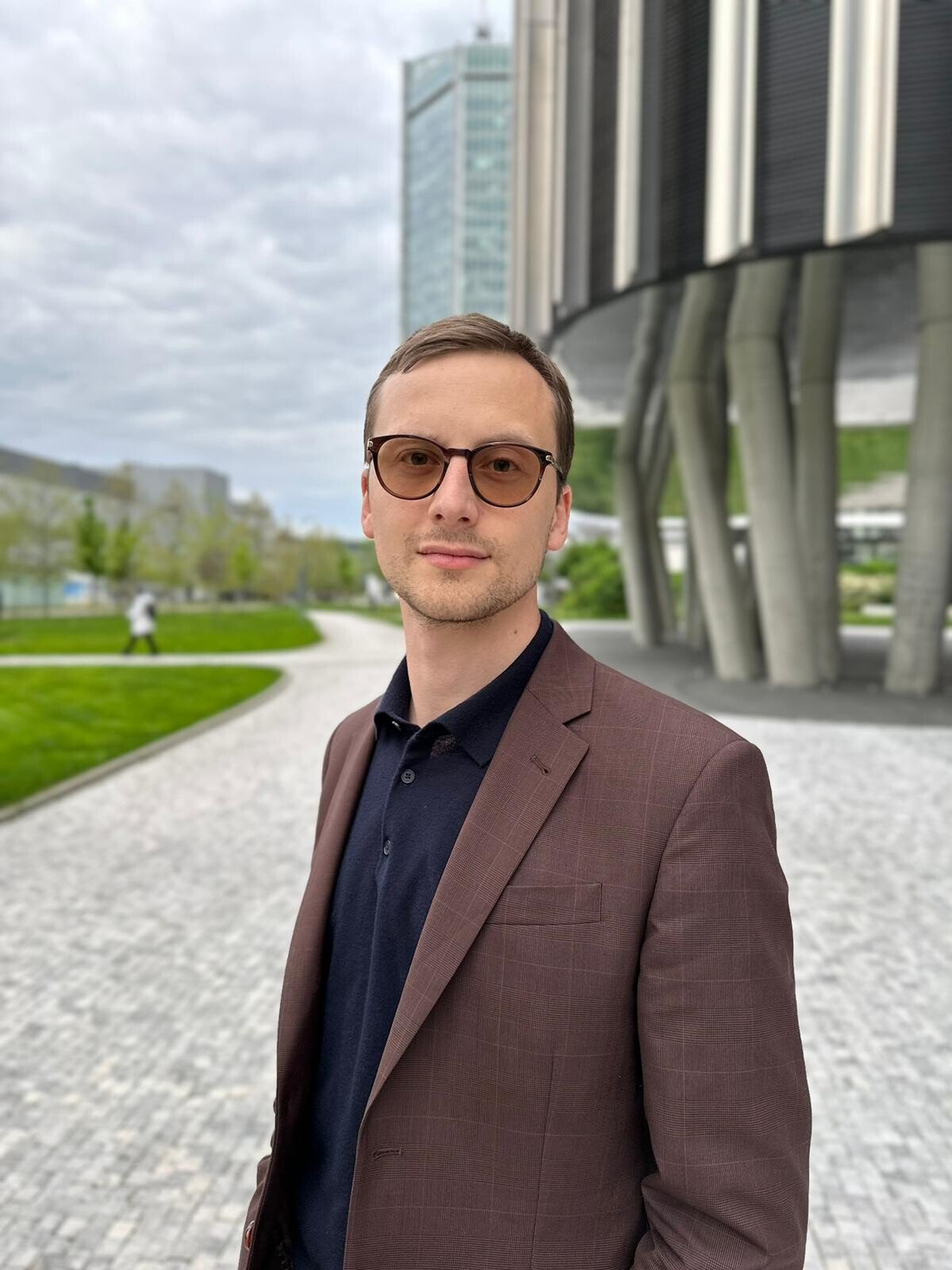
Today you run a business in the USA, but you started as a hockey player in the Czech Republic. Did you have ambitions to devote your life to hockey?
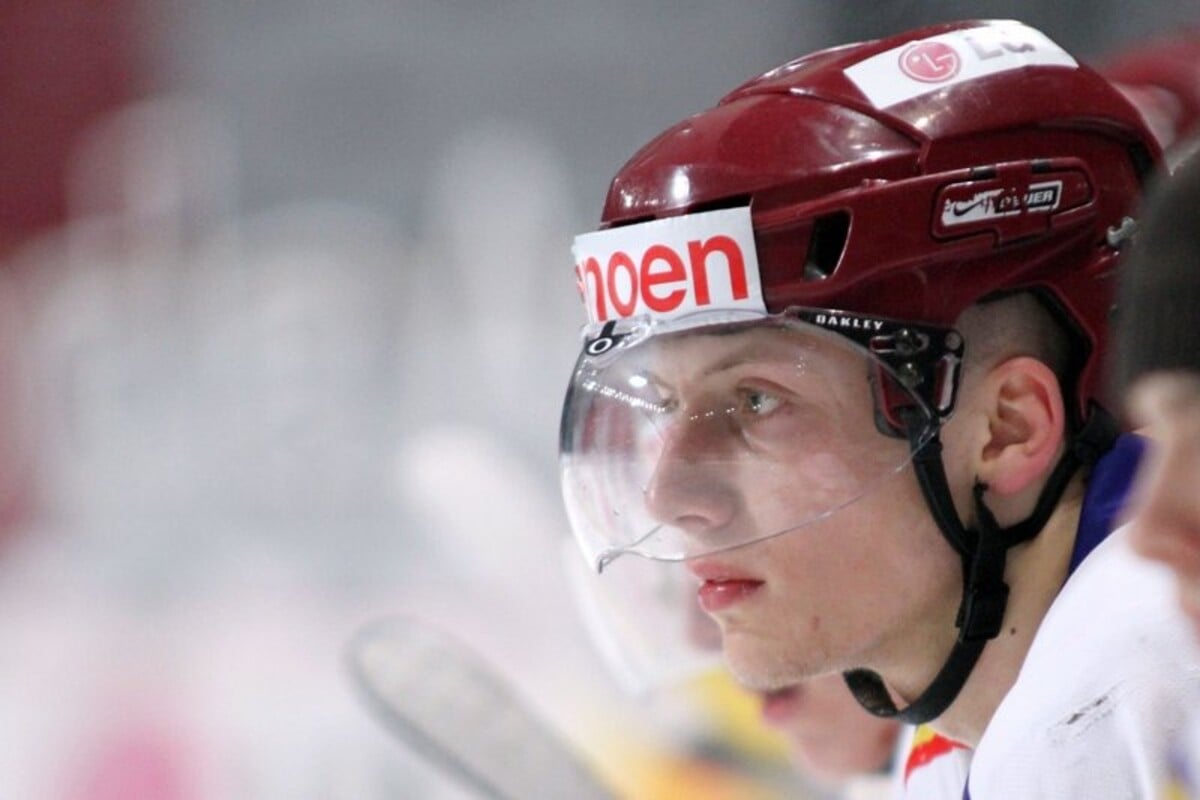
Yes, I spent my whole life as a hockey player. I started at the HC Kobra Prague club, but it was important to my parents that I also keep my education – as high-quality as possible. But my ambition was to play hockey. When I was considering a transfer to the higher league within the youth and junior teams, I fought my way through to Sparta, where this ambition became even stronger. We played the best in the Czech Republic. I thought that I would play professionally. I played a few professional matches and for a while I was part of the A team at Sparta. But I wasn't as good as the others, for whom it was clearer that they could probably make a living from hockey. I didn't have the hockey level for that and at the same time I also had non-hockey/academic ambitions. When I was thinking about what I would do after graduation, I started college in the Czech Republic and played hockey at the same time. It wasn't easy, but I could manage it. I went to college for exams, at the same time I was preparing for the season with the A team, but then I had to decide between the 1st league or quitting hockey altogether. I could only play the 1st league if I cut back on school, and I definitely didn't want to at that time. I didn't want to compromise between education and sports.
And how did the idea of going to study and play hockey in the USA come about?
Several people around me played a role in this, who inspired me. The first of them was my then Sparta teammate Yorick Treil, who was a French national team player at the time and had previously played at the university. The second was one of my best friends, Petr Boháček, who went to America to play American football. These two showed me that it is possible to combine both in America, and I wanted to explore it further and see if I would like one of the universities. In the Czech Republic, there must be good role models that athletes are not just “hockey sticks” or “football players”, but are people who can offer enormous value to society.
How old were you?
I was 20 or 21 years old. I traveled relatively late. I finished my second year of college and only then did I go to America. Even from a hockey perspective, I didn't go the maybe slightly more "normal" route, like going to the junior league in the USA and then to university. I went straight from the Czech Republic to university in America.
What are the key differences between the U.S and Czech when someone wants to study and do sport at high level?
The main difference is systemic. In America, the institution of sports and the institution of education are one. University athletes really play sports for their university. This is in contrast to the Czech Republic, where these are completely separate institutions. On one side is the academy or educational institution and on the other side is sports. And these two institutions do not communicate well with each other, they do not respect each other enough, and therefore it is more challenging for sports students to function in this system if they want to do both. But I must say that things are already improving here too.

What would have to change in the Czech Republic to bring it to a similar level as in America? Is that even realistic?
I think that the huge issue is finance. In America, this system is long-term, and it mainly revolves around money that generates profits for universities. Thus, the university is also happy to have the sport, because sport then promotes the name of the university and helps recruit new students - and not only those who play sports. For example, one study shows how successes in American football helped the University of Alabama increase its income. Thanks to the fact that they were winning, more and more people wanted to go there. Sport has enormous value there. Smaller sports may not have such a strong impact, but the principle is the same. In the Czech Republic, there must first and foremost be good role models that athletes are not just "hockey sticks" or "football players", but are people who can offer enormous value to society. That is one thing at the individual level. Then at the institutional level, it is about starting to show these role models. But I must say that this is already happening in the Czech Republic. Specifically, there is the University Ice Hockey League (ULLH), which is a league that is already registered under the Czech association, and university students across the Czech Republic play against each other. This league does a great job of promoting that sport can have a huge role in the academic environment and at the same time in society. That's what we at USA Sport & Study do too. We are dedicated to sports, studies and careers, but in the end it's about the fact that a person who has done sports – and it's not just sports, but also other extracurricular activities – can have a huge value for society. You learn a lot because of it. To put it in an extreme way, even if you watch Formula 1: Drive to Survive as a fan, you see in one season all the lessons and themes that you can see and use in your life – how to work with losing, the need to have patience, endurance, so that you experience the feelings of victory or be internally motivated to achieve something.
How financially demanding was it for you to study and play sports in America at the same time? Did you have a scholarship thanks to sports, or did you have to pay for your studies?
I was lucky that the school gave me financial aid. Financial aid is something like a social scholarship in a loose translation. NCAA DIII does not offer sports scholarships, but the school itself gave me aid after certain agreements and in the end I only had to cover the costs of food and accommodation. My tuition and other fees were covered by the school in the form of this financial aid and with the support of my parents I would have been able to travel there. In America, I tried even harder to get an internship, then a full-fledged job and to create a return on this financial investment. But it was not just a financial investment, because the whole process is also an investment of time and energy. Return on investment is key in planning the process if a person thinks about similar steps on their own. A person must set their path in such a way that they create the highest return on the investment of their time, effort and money. It is not about just spending nice years of study in America, but also taking full advantage of them and building a position for subsequent employment.
What does a young person from the Czech Republic have to do or know if they want to follow this path? What are the prerequisites they must have to succeed in school and sports in America?
I would divide it into a few main categories. If we are talking about athletes who are going to study, they must have the best possible school results, i.e. the best possible grades. They must also be in the best possible condition in terms of English. It is no longer the case that a person will learn English when they get there. Competition is extreme and global today, not knowing English well is a huge disadvantage. Those are the first two prerequisites. Of course, not all sports are supported at universities, for example, handball from the Czech perspective. There is a list of sports that are university sports. A person involved in sports should be in the best possible condition in terms of performance, if not in a transnational context, then at least in a national one. At the same time, however, sport may not be the main reason why people want to go to America, it may just be an additional matter. A person does not necessarily have to be in the top 10 in the Czech Republic to be able to explore this option. If a person does sports and wants to go abroad, mainly to North America, then it is necessary to say to yourself, and this is the last point, that there is also a financial aspect to it. If a person does sports at an elite level, they can get a sports scholarship. This means that it covers tuition, food, accommodation, but then the person also has some "pocket money". If schools really care about someone, they are able to support them in this way. If a person does not do sports at such a level, then the scholarship will be slightly lower or none at all. If we put these four elements together, i.e. school results, language level, sports level and finances, then the person is ready to at least think about what the options are for him. But it does not make sense for everyone to go to America or Canada. We also deal with sports students who go somewhere in Europe or perhaps stay in the Czech Republic, because we think that sports as such make sense to keep, and in Europe you can also think of ways to combine it.
And how were your entrance exams?
In my case, the first step was – and this is usually the case for athletes – that a school was found based on my sporting level and sporting ambitions, then conversations took place with the coach and at the same time I had to prepare for the admissions tests. In the American context, these are composed of several parts. You have to write essays, in the Czech context something like a motivation letter, have a translated report card and then take standardized tests. These tests are currently mainly language tests, but it is also a good idea – although it is already voluntary at most schools – to take a standardized test, SAT or ACT, which is something like SCIO tests, if I compare it to the Czech Republic. You always take these tests, but there is a score tied to them and based on this score you then go through the application process. In addition to English, it is a standard process that even a student from a given country has to go through. We often have people who may have talent but do not have such a financial background. We are able to (...) give them scholarships for our preparatory programs and finance our services and mediation of studies abroad.
How did you start the business?
It started when I was in my second year of school in America and I still had a year and a half to go, people came to me wanting advice. I gave advice to a few people and then my friend Petr Boháček and I founded this project together, which I continued on my own after agreement, because Petr already had other activities (such as sending satellites into space or currently a mission to the moon). Anyway, it was just a hobby at first. We first helped one football player get into school, then two more came along. We didn't have that much money for it and our expertise wasn't that deep at the time, but we worked all the harder. The project was called USA Sport & Study, but for the first three years it wasn't a full-fledged job. I was doing school, playing hockey and still looking for an internship. I thought that when I finished school, I would just let it go and never go back to it. When I got the internship, I was able to turn it into a full-time job and then I worked in Manhattan. But after a year of work, I left so I could devote myself to this project full-time. That was in 2016. Since then, we haven't stopped and have gradually added various other complementary activities. Currently, we are also focusing on career development, because the people who came to us wanted to deal with school and subsequently work, which we can grasp thanks to our many years of experience and knowledge of the environment.
What are future plans?
From the perspective of helping people who want to go abroad with sports, we are of course mainly focused on America. Then there is Canada and now increasingly also continental Europe. We have projects that we would like to expand, such as cooperation with universities, because we think that the experience of sports while studying can be extremely valuable for a person. In the Czech context, we want to focus more on career advancement. We are already helping individuals who are in America and want to find a job in America, but some want to return to the Czech Republic from America, so we help them pre-solve their job application, or at least help them grasp their knowledge and experience, translate it into their CV and job interview. Then athletes who have finished their sports careers and want to establish themselves in a job come to us. We have spent a lot of time understanding individual sports competencies and helping them integrate them into a non-sports environment. Professional athletes who finish their careers can transfer many competencies and skills to both their personal and professional lives. Athletes usually retire at around 35, and not all of them will earn money for the rest of their lives. So it is necessary to think about the back door and be able to get the most out of sports, athletes are generally a highly sought-after commodity for employers. From the perspective of the overall vision, we are expanding our activities to include a support fund. People who may have talent but do not have such a financial background often come to us. We are able to give them scholarships for our preparatory programs and finance our services and arranging for them to study abroad. We were thus able to arrange for these people to pay us the bare minimum. But what we want to do more and more now is to arrange for various institutions or individuals to have the opportunity to support these student athletes. We manage a fund that expands the possibilities for students and their families who have financial limitations, but at the same time could, with our help, secure a good scholarship abroad and then either work there or return. That is a huge vision for us now. We want to create a really good, sustainable program in the Czech Republic that can support students not only with advice and scholarship mediation, but also help them cover other financial costs.
How many Czechs have you helped so far?
It's in the lower hundreds, around 350 people. I did some calculations recently, and the number that surprised me is that we saved people about $35 million in scholarships, financial aid, and so on.
And what does this help look like in practice? What does a potential applicant have to do and what does the help from your side look like specifically? Let's say, for example, that I was an applicant and I wrote to you that I wanted to go to the USA to study and play sports. What would happen then?
First of all, we need to get to know each other, that is, do some assessment. We collect information about you as a student, athlete and the overall situation. Based on our expertise and knowledge, we are then able to say what the options are. Then, of course, it is up to discussion, but then, when we say that we have a clear goal in front of us, we will make a road map of the individual steps. One phase is preparation, which can be preparation for applications, for English, mental preparation, potentially also sports. And then comes interaction with universities. This means that we mediate contacts with university coaches, help put together the entire preparation for applications and provide all the documents. We are then behind the person step by step, to help with logistics and the visa process or mental preparation. We then continue to be in contact with students and their families as needed, and if something fundamental is being addressed, we are able to help them. I personally am in America most of the time and we have contacts with people all over the states who may also be able to help. And as I said, it's not a rule, not everyone wants it, but then we are able to help plan career progression while studying at university.
Can you tell how much does the help cost?
We have more services, and most importantly, we tailor them to your needs. Every person needs something a little different, so we range from a few thousand crowns for a series of consultations to around 150 thousand crowns if you want really thorough support. This includes arranging placements, preparing for all tests, preparing for all applications, language and mental preparation, and support throughout the entire process. And any extra care and availability of our team for intensive solutions. We understand that not everyone can afford to pay for consulting services and studying abroad. We are in close contact with partner companies and foundations and have also created our own endowment fund. These collaborations then allow us to help a wider range of applicants who do not have such a strong financial background, but who deserve support. These are really powerful stories, and we are happy to be able to help young people accelerate their journey both in terms of consulting and financially.
When you left to study and play sports in the USA on your own, what was the hardest part of the process for you when you didn't have similar help?
I mainly struggled for about two years before I even left. At that time, there was already some information and now there is a lot of it, but the biggest thing that we bring as a service is that we have collected the best information from all corners and put it into context for a specific person. That's why my process before I even left took a long time. And it wasn't that I was waiting. I wanted to leave as soon as possible, but the biggest thing for me was to put all this information together. That's the essence of what we do. Having general information thanks to Google can be had by everyone today. That's certainly a decent start, but it's not a tailor-made solution for that particular person. That's the most important thing - the extreme individualization of the process. When I left New York from a pretty good job, I was leaving money on the table and parting with it on good terms, so I said to myself, let's do it properly, because I want to be able to help these people get into the best institutions. At the moment, we have clients at Harvard, Princeton, Dartmouth, Cornell, which are objectively the best schools, and we have people there who we have helped get there. This is precisely because we have gone to that extreme individualization of the process for a given person. Let's say you play tennis, you want to study economics, and next to you there is another guy who plays tennis and studies economics. Does this mean that you will have exactly the same path? Not at all. Because you have different preferences about what you want to do, and you are different academically and athletically. These scales are very sensitive and it is necessary to calibrate it. That is what we focus on the most, to calibrate the process as much as possible to the given person. It is not just about the person going to America, but that he goes to the best place he can go. That is also why we are addressing not only North America, but also Europe or the Czech Republic. For some people, it certainly makes sense to enroll in a Czech school, for example, because it is not so financially demanding and they want to do sports once a week and study a field that would be a hundred times more expensive in America than here. It is about individualization. Today, everything is available, but it is necessary to "dissect" the person and then prepare everything for them. You mentioned top universities like Harvard or Princeton. What does the admissions process look like for such universities? It must certainly have extreme demands. That is true. This year we will have a second person at Princeton, and the one who is there now will graduate next year. The process is somewhat similar to other universities, but it is more intense. A student-athlete presents his sports results, but right next to that, it is necessary to remember that an athlete must also have academic qualifications - he must have fairly good grades and English. At the same time, it is one thing to get into a school and another thing to survive there. We are in contact with the coaches, so we communicate sports results, academic results and then the entire admissions process is handled. But there are a lot of people from all over the world who want to go there, and it depends on who is better at what. And even if there is a pre-confirmation by the coach, you still have to go through the admissions process. But it has an extra label that they are a student-athlete and that the coach wants them, so they are not in the same category as someone "from the street" or someone without sports. At the same time, it is necessary to say that these schools are not for everyone, it really has to be the right fit. Getting into these schools is really hard, but it is much harder to stay there and manage it. The applicants themselves must realize this. We have people who could go to these schools, but maybe they don't go there because they find a better fit for themselves elsewhere. Maybe not at such a well-known school, but it will be a better environment for them in which they can develop to their best potential.

And how are athletes perceived in the US job market who, for example, failed in a given sport or whose priorities have changed, but have a high school diploma? Is there any advantage in the eyes of potential employers to having a certain sports university career? Is such a person perceived any better than someone who did not have a sports career?
At the end of last year, I gave a few big lectures for an American university, where we also did workshops for all their sports students, so that they could think and analyze what they could gain from their sport, whether it's hockey, football, tennis, or anything else, in terms of transferable competencies, and what steps they could take to get the internship and job they want. For example, if there's an economics student with a certain average and there's someone next to him who is at least comparable, maybe not quite as good an average, but he's a student who plays sports, then he has some advantage there (if he's able to communicate it well). This is because in the American context it's understood a little differently than in the Czech one, but I think it's starting to be understood in the Czech Republic too. It's about the fact that a person learns a lot of important things through sports that they might not immediately realize are transferable to work, but they certainly are. Whether it's the ability to lose, the ability to endure difficult situations, etc. The bottom line is that this person offers their specific competencies, which are very valuable to employers. These are other activities that we do in America, and now we want more and more in the Czech Republic. We already have very nice examples here of people who went to school in America, then came to the Czech Republic, got an internship and were able to use some sports experience to then establish themselves at work. We deal with this topic every day with my colleague Adéla Hofmannová, who is a former national runner. Adéla is an excellent example of how she transfers her determination and consistency to the work context and the results come accordingly. Sport is not just for sport, but there is also this deeper element in it. And when that depth is explored and explored, the whole society can benefit from it.
Is there a particular sport that is most respected in America? Are they the ones that are most visible, like hockey or American football?
From the perspective of a certain prestige of a given person, it would be easier for a former NFL player, for example, to find a job in a company, because it is a name. But if I were to take it in a way that is understandable to most people, it is not at all like that. And this is because each sport carries something different with it. If we divide it into a very basic level, then team sports and individual sports are different. If you take a football player and a tennis player, they will be different. A tennis player plays a lot for himself, which means, to simplify it, that he can be an excellent goalie, because he has a shot at the goal and doesn't look left or right. Whereas a football player can be a good manager. Of course, I'm not saying that he can't be a good goalie, every person is different. If I were to generalize, each sport carries some detailed specifics that a person can then apply at work. It's about how to decipher these specifics. For example, a hockey goalie and a forward will be a little different, but two forwards will also be different from each other. One will be more creative, the other more straightforward. You can take those parallels from sports. If you get a good grasp of it, people will get to know themselves better and accelerate their career curve, because they already have a decade or more of extracurricular and extra-career experience behind them, they can just use it beautifully going forward.
Finally, do you have any advice for young Czechs who are thinking about traveling abroad, but perhaps haven't decided yet?
If they have this ambition and are interested, we are of course available to analyze their individual situation. In general, however, I would say that it is always worth at least trying this path, if it is possible for them. This approach has proven to be correct for me several times in my life. When I was still a hockey player at Kobra and I was considering the possibility of transferring to the youth team at Sparta, I tried it despite the risk of failure and thanks to that I got on a trajectory that I could only dream of. Therefore, I am definitely always in favor of people trying it and taking that extra step. At worst, they will find out that the path is not for them. The worst option is to let the opportunity go and then think about whether I should have tried it...
JSTE
PŘIPRAVENI

Jste připraveni udělat další krok k dosažení vašich sportovních a akademických snů v zahraničí? Ať už jste sportovec, který chce vyniknout ve svém sportu a zároveň získat titul, nebo student hledající perfektní akademické prostředí, jsme tu, abychom vás provedli na každém kroku. Studium v zahraničí jedině s námi!
Domluvte si s námi e-kávu a probereme více


